
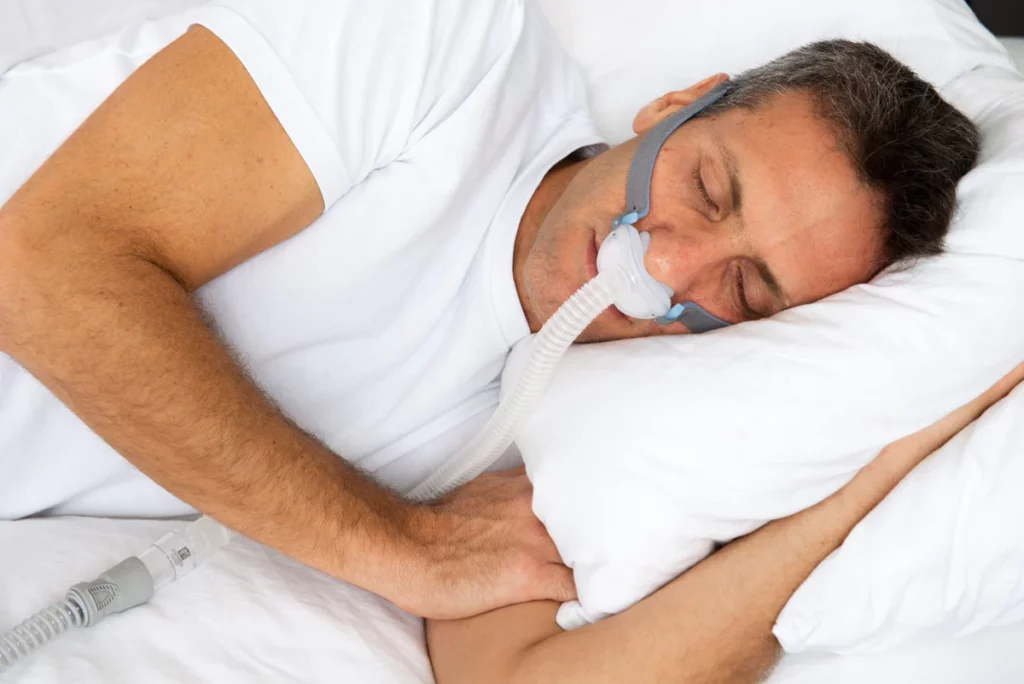
Sleep apnoea is often described as “just snoring”, but clinicians know it can be far more serious. In Brisbane and across Australia, providers use structured sleep studies to measure how often breathing stops or reduces during sleep, then grade severity so treatment matches risk.
This guide explains how sleep testing brisbane services diagnose apnoea severity, what they measure, and what the results typically mean for patients and their GPs.
What is apnoea severity, and why does it matter?
Apnoea severity is the clinical grading of how disruptive breathing events are during sleep. It matters because severity guides treatment choices, urgency, and follow-up, especially for people with daytime sleepiness, safety-sensitive work, or cardiometabolic risk.
Brisbane providers usually report severity using the Apnoea-Hypopnoea Index (AHI) and supporting measures like oxygen desaturation and sleep fragmentation.
How do sleep testing brisbane services confirm someone actually has sleep apnoea?
They confirm obstructive sleep apnoea (OSA) by recording breathing and oxygen patterns overnight, then scoring events under recognised criteria used in Australia. A diagnosis is generally based on the frequency of apnoeas (stops) and hypopnoeas (reductions), alongside symptoms and clinical history.
Most sleep testing brisbane services also consider snoring, witnessed pauses, morning headaches, and excessive daytime sleepiness when interpreting results.
What types of sleep studies are used in Brisbane?
They commonly use two study types: in-lab polysomnography and home sleep apnoea testing (HSAT). In-lab studies are more comprehensive, while home tests are often used when OSA is suspected and the person is otherwise medically stable.
In practice, sleep testing brisbane services may recommend an in-lab study for complex cases, and HSAT for straightforward suspected OSA.
What does an in-lab polysomnography measure?
It measures sleep stages and multiple body signals at once, usually including brain activity (EEG), eye movements, muscle tone, airflow, breathing effort, heart rhythm, oxygen saturation, and limb movements. This helps clinicians see not only breathing events, but also how sleep quality is affected.
Because it captures sleep staging, in-lab testing can show whether events cluster in REM sleep or particular positions.
What does a home sleep apnoea test (HSAT) measure?
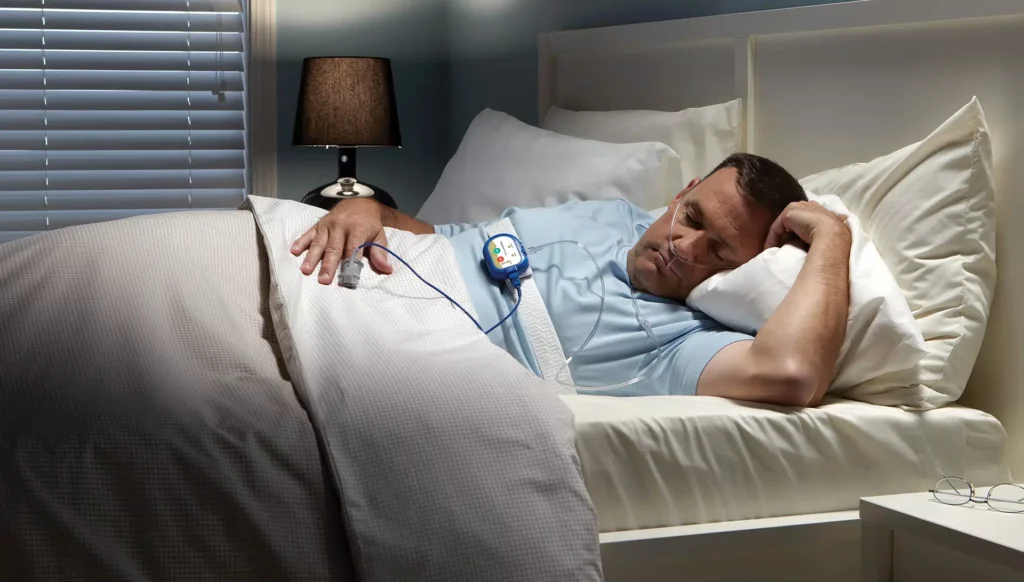
It usually measures airflow, breathing effort, oxygen levels, pulse rate, and sometimes snoring and body position. HSAT is designed to quantify breathing events rather than provide a full picture of sleep architecture.
When HSAT is used, sleep testing brisbane services interpret results carefully, especially if symptoms are severe but the recorded event rate seems low.
What is the AHI, and how is it calculated?
AHI is the number of apnoeas plus hypopnoeas per hour of sleep, or per hour of recording time in many home studies. It is calculated by scoring each qualifying event across the night and dividing by the hours measured.
In reports from sleep testing brisbane services, AHI is typically the headline number used to grade mild, moderate, or severe OSA.
What counts as an apnoea versus a hypopnoea?
An apnoea is a near-complete pause in airflow for at least 10 seconds, usually with ongoing effort in obstructive apnoea. A hypopnoea is a partial reduction in airflow for at least 10 seconds, typically linked to oxygen drops or arousals from sleep.
These definitions follow standard scoring approaches used by sleep clinicians in Australia.
How do they grade mild, moderate, and severe OSA?
They commonly use AHI thresholds: mild is often 5 to 14 events per hour, moderate is 15 to 29, and severe is 30 or more. These cut-offs help clinicians communicate risk and align therapy intensity to disease burden.
Even with a “mild” AHI, symptoms and oxygen impacts can lead to more proactive management.
Why do oxygen drops matter as much as event counts?
Oxygen desaturation shows how physiologically stressful the breathing events are. Two people with the same AHI can have very different oxygen patterns, which can change how clinicians view cardiovascular strain and urgency.
Many sleep testing brisbane services report minimum oxygen saturation, time spent below key thresholds, and an oxygen desaturation index (ODI).
What is the Oxygen Desaturation Index (ODI)?
ODI is the number of times per hour that oxygen saturation drops by a defined amount, commonly 3% or 4%, depending on the scoring method. It provides another lens on severity, especially when hypopnoeas are prominent.
If ODI is high, clinicians may treat the case as higher risk even when AHI sits near a threshold.
How do arousals and sleep fragmentation influence severity?
Arousals are brief awakenings that disrupt sleep continuity, often triggered by breathing events. High arousal rates can explain severe fatigue, poor concentration, and mood symptoms even when oxygen levels do not look dramatic.
In-lab studies can quantify arousal index, which can strengthen the case for treatment.
How do body position and REM sleep change the severity score?
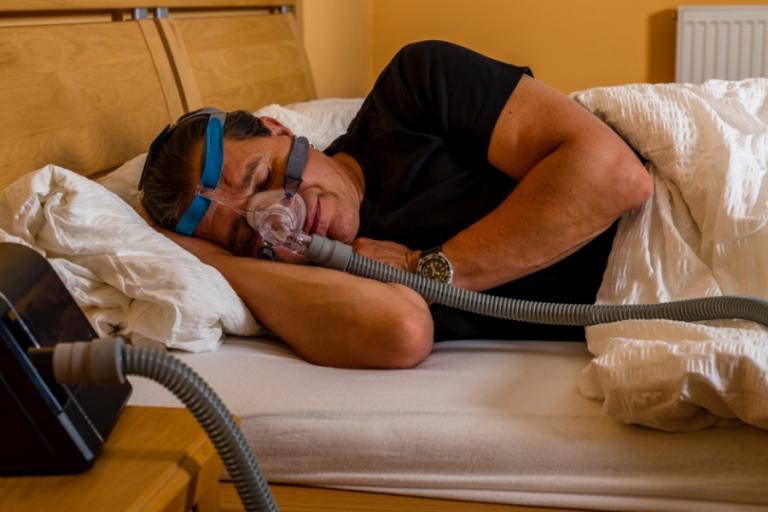
OSA often worsens when a person sleeps on their back or during REM sleep when airway muscles relax more. A study may show a modest overall AHI but a very high “supine AHI” or “REM AHI”.
In Brisbane, clinicians may use this pattern to recommend positional therapy, CPAP trials, or targeted weight and airway strategies.
How do they identify central sleep apnoea and mixed events?
They use breathing effort bands and airflow signals to see whether the body is trying to breathe during events. In obstructive apnoea, effort continues against a blocked airway; in central apnoea, effort reduces or stops because the brain’s drive to breathe is unstable.
When central events appear, Brisbane sleep testing services may suggest in-lab testing, medication review, or cardiopulmonary assessment.
How do comorbidities affect how results are interpreted in Australia?
They can shift concern upward even at lower AHI values, particularly for people with heart disease, atrial fibrillation, stroke history, type 2 diabetes, resistant hypertension, or significant obesity. Daytime sleepiness and workplace driving risk also raise urgency.
Australian clinicians often treat “numbers plus symptoms plus risk” rather than numbers alone.
What happens from referral to results in a typical Brisbane pathway?
They usually start with a GP referral, symptom screening, and selection of HSAT or in-lab testing. After the study, a sleep physician or trained clinician scores the recording, issues a report, and sends recommendations back to the referrer.
Many sleep testing brisbane services also offer CPAP education and follow-up pathways, depending on the provider.
What should they expect in a sleep study report?
They can expect a clear summary of AHI (or equivalent), oxygen metrics, heart rate trends, snoring notes, and positional breakdown. In-lab reports may include sleep stages, arousals, limb movement indices, and additional respiratory metrics.
The report typically ends with an impression, severity grade, and practical recommendations to discuss with the GP.
How do clinicians ensure the test is reliable?
They check signal quality, total recording time, and whether sensors remained in place. If data is limited, they may recommend repeating the test or escalating to in-lab polysomnography for clarity.
Good providers will note limitations explicitly, which helps avoid under-diagnosis.
When would home testing be considered insufficient?
It can be insufficient when symptoms are severe but HSAT is negative, when central apnoea is suspected, or when there are complex comorbidities such as significant lung disease or neuromuscular conditions. It may also be limited in suspected parasomnias or seizure disorders.
In these cases, sleep testing brisbane services often recommend a lab study to capture sleep staging and broader physiology.
How does severity translate into treatment options?
Severity helps determine whether lifestyle measures alone are realistic or whether device therapy is needed. Mild cases may focus on weight management, positional therapy, alcohol reduction, and nasal optimisation, while moderate to severe cases often benefit from CPAP or other airway therapies.
In Australia, CPAP is commonly trialled when symptoms and risk factors align with the recorded severity.
What role do CPAP trials and follow-up data play after diagnosis?
They help confirm that treating the measured severity improves symptoms and reduces residual events. CPAP devices record usage, leak, and residual AHI, which can guide mask fitting and pressure changes.
Some sleep testing brisbane services coordinate this follow-up with the patient’s GP and a sleep physician, particularly in the early weeks.
See Also : How Long Does Sleep Testing Canberra Usually Take?
How can they prepare to get the most accurate results?
They should follow instructions closely, keep a typical sleep routine, and disclose alcohol intake, sedatives, and medications that may alter breathing. For HSAT, correct sensor placement and ensuring adequate recording time are key.
If symptoms fluctuate, clinicians may ask for notes about sleep position and how they felt the next day.
What questions should they ask their GP or provider after testing?
They should ask what the severity grade means for their health risks, whether oxygen drops were significant, and whether events were position or REM-related. They can also ask whether the pattern suggests obstruction only or possible central events.
For Brisbane residents using sleep testing brisbane services, it is also reasonable to ask about timelines for treatment setup and what follow-up is included.
How do sleep testing brisbane services diagnose apnoea severity in a nutshell?
They diagnose severity by counting breathing events (AHI), assessing oxygen impact (ODI and time low), and reviewing how sleep is disrupted by arousals and patterns like REM or supine worsening. The final severity grade is then interpreted alongside symptoms and medical risk.
When done well, sleep testing brisbane services provide a practical severity assessment that supports clear next steps, whether that is lifestyle change, CPAP, or further specialist review.